


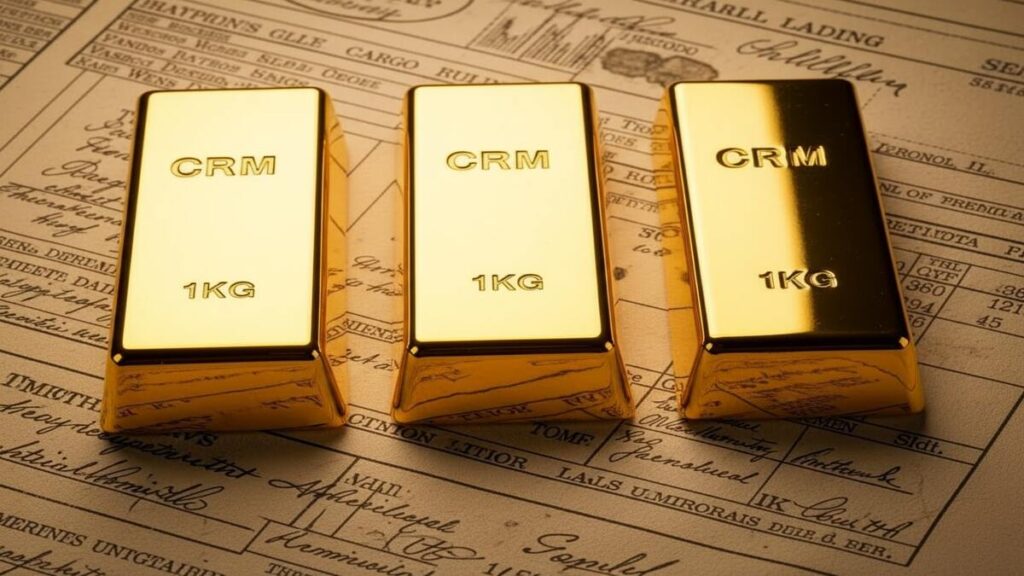
A lot of buyers start with a simple goal: buy gold in Africa at a strong price.
Then reality hits.
A one-off purchase can work, but it often comes with the same pain points:
- inconsistent availability
- rushed paperwork
- delays that break your pricing window
- “we can deliver next week” turning into “maybe next month”
- internal compliance teams asking for documents after the deal is already in motion
If you’re a serious buyer (retail investor scaling up, a trading desk, or an institutional buyer), the smarter approach isn’t just finding a reliable gold seller. It’s building a repeatable supply system.
That system is called an allocation model.
This post explains what allocations are, why they create better outcomes than one-off buying, and how Congo Rare Minerals structures supply to support consistent delivery of Congo gold bars when you buy gold online from a DRC gold exporter.
The core problem: one-off buying creates “chaos costs”
Even when the gold price looks good, one-off buying tends to create hidden costs:
- Time costs: every deal restarts the same negotiations
- Compliance costs: KYC/AML and documentation requests keep repeating
- Logistics costs: routes and handoffs aren’t standardized
- Pricing costs: market moves while approvals and payments drag
These costs don’t always show up as a line item, but they show up as missed windows and unnecessary friction.
An allocation program reduces those costs by turning your purchase into a predictable cycle.
What is a gold allocation program?
A gold allocation program is a structured agreement that reserves supply for you on a repeat basis.
Instead of asking “Do you have stock today?”, you agree upfront on:
- monthly or quarterly quantity (even if you start with a trial)
- bar formats (100g, 250g, 500g, 1kg, 5kg, 10kg)
- purity specs (22K vs 24K/999.9)
- verification pathway (assay rules, settlement method)
- delivery terms (FCA/CIP/DAP with named place)
- pricing rules (window and validity)
You’re basically turning buying gold from an event into a system.
One-off purchase vs allocation model
| Factor | One-off buying | Allocation model |
|---|---|---|
| Availability | “Depends on the week” | Reserved volume planning |
| Pricing | Negotiated every time | Pricing rule + window can be standardized |
| Compliance | Re-explained each deal | Re-usable buyer file + repeat workflow |
| Documents | Often assembled late | Standard doc pack prepared per cycle |
| Logistics | Route changes frequently | Repeat lanes reduce delay risk |
| Risk | Higher timing and coordination risk | Lower friction, fewer surprises |
If you’re searching for buy gold wholesale options, this is usually the difference between “supplier” and “partner.”
Why allocations matter specifically in African gold trade
In many supply regions, production is not “factory smooth.” There are real-world factors: aggregation timing, security routing, export scheduling, and verification steps.
A reliable exporter solves this with planning.
Congo Rare Minerals’ strength (especially in North Kivu) comes from scale and a broad network of small-scale miners feeding consistent aggregation. That’s what makes an allocation model realistic: predictable flow, not just big promises.
When buyers ask for “cheap gold online,” what they usually want is efficient pricing + deliverability. Allocations help deliverability.
The 5 building blocks of a clean allocation program
1) Standardized product spec
Decide your “default”:
- 24K/999.9 bars for investment/custody routes
- 22K if your use case is different
Then define your standard sizes (example: 1kg as default, 10kg for bulk efficiency, 100g for flexibility).
2) Verification pathway you won’t renegotiate every month
This is where deals get stuck.
A good program defines:
- what testing is used (screening vs definitive lab confirmation if required)
- who is the assay authority for settlement (refinery lab, third party, or an agreed process)
- how variance is handled if results differ
Once this is agreed once, future cycles get easier.
3) Pricing rule that matches your approval speed
Instead of arguing about price changes, define:
- spot reference + pricing window
- quote validity
- what happens if approvals take longer than expected
This is how you stop losing money to timing.
4) Delivery lane and named destination
Pick a repeat route:
- refinery intake
- vault receiving point
- bank custody pathway
- secure pickup point
Then lock the delivery term (FCA/CIP/DAP) so insurance boundaries and handoffs stay consistent.
5) Document pack discipline
Allocations work when the paperwork is repeatable.
Each cycle should produce a consistent pack:
- proforma invoice (pre-dispatch)
- packing list
- assay references
- bar serial list or batch IDs (where applicable)
- shipping and insurance documents (where used)
- export/transit documentation (as applicable)
A realistic scenario: how allocations save money (not just time)
Let’s say you’re buying 20 kg per month.
One-off model:
Every month you re-negotiate price, argue over delivery terms, and wait for docs. Your approvals take 3–5 days. Gold moves during that time. Some months you get it done, some months you miss the price window.
Allocation model:
You agree once on:
- product spec (e.g., 1kg bars, 24K/999.9)
- a pricing window (e.g., spot at confirmation with 24-hour validity)
- a delivery lane (e.g., CIP to nominated destination)
- a recurring document pack
Now your monthly transaction becomes execution, not negotiation. That reduces the “chaos cost” that silently makes deals expensive.
How to start an allocation without over-committing
You don’t need to jump straight into massive monthly volumes.
A smart approach looks like this:
- Trial (1–10 kg depending on your profile)
- Confirm workflow (docs, verification, delivery lane, timing)
- Scale to monthly allocations once the cycle proves consistent
That’s the exact approach sophisticated buyers use when they want to buy gold in Africa and scale responsibly.
FAQ
Is an allocation only for institutions?
No. It’s for anyone who wants repeat buying without starting from zero every time. Even retail investors scaling up benefit.
Will allocations make gold “cheaper”?
Allocations don’t magically remove the market price. They remove inefficiency: repeated negotiation, repeated delays, and avoidable handoffs. That’s how you protect value.
Can I combine sizes in one allocation (1kg + 100g)?
Yes. Many buyers do a “core” size (like 1kg) plus smaller units for flexibility.
What if I want to pay with crypto on some cycles?
That can be part of the program as long as the payment method, verification, and quote validity window are agreed in writing.
What if my monthly quantity changes?
Good programs allow a range (minimum + target), so you can scale without breaking the workflow.
CTA
If you’re ready to stop buying gold “one deal at a time,” start building a simple allocation plan:
- Browse bar sizes and reference pricing on /shop/
- Choose a “default” size (100g, 1kg, 10kg) and purity (22K or 24K/999.9)
- Contact Sales and request an allocation quote with:
- monthly quantity target
- pricing window + validity
- delivery term (FCA/CIP/DAP) + named destination
- verification pathway and standard document pack
If you want, tell me the allocation you want (trial size + monthly target + destination: refinery/vault/bank custody), and I’ll format it into a clean one-page Allocation RFQ you can send to buyers or use internally.